


Lightning Protection of Rooftop Solar Power Plants
Rooftop solar power plants are a candidate to be one of the most important renewable energy investments in the coming period. Of course, with the increase in roof applications, a question comes to mind. How should rooftop solar power plants be protected against lightning strikes? In this article, we will look for the answer to this question.
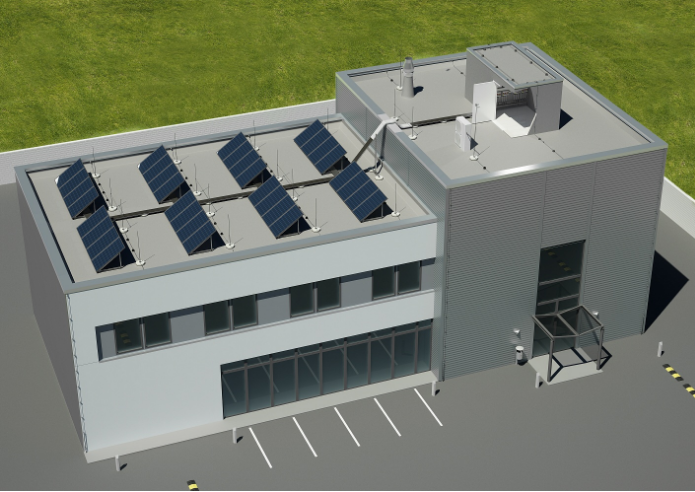
Although solar power plants are generally installed on large lands on the ground for now, roof applications have become increasingly common. This has seriously increased the risk of lightning strikes according to the terrain conditions. Let's just say that the risks caused by lightning may not only be a direct lightning strike, but also the spread of lightning from the ground or even blows from the network. In roof systems, it is necessary to look at lightning protection as a four-way system. These are external lightning, internal lightning arrester (ag surge arrester), equipotential and grounding.
1-External Lightning
You can protect against direct lightning strike with 3 different methods in Roof Solar power plants. These;
1-) Faraday Cage method by creating a protection angle with long catch tips from the back of the panel: A faraday system is created on the surface of the facility.
2-) Creating a protection angle with short catch tips on the panel: In this method, each panel is included in the equipotential system.
3-) Field area protection: Area protection with OBO Bettermann insulated lightning arresters-ring line and equipotential system is of great importance.
Which system to choose is made by our engineers with on-site exploration and project design. At this point, the cost of the project and the fact that it does not shade the panels come to the fore.

Use of Insulated Down Conductor
Another point to be considered is that when the lightning down conductors are lowered to the ground, if the distance S cannot be left, it must be descended in an isolated manner. Otherwise, lightning may damage the surrounding structure.
Internal Lightning Surge Arrester
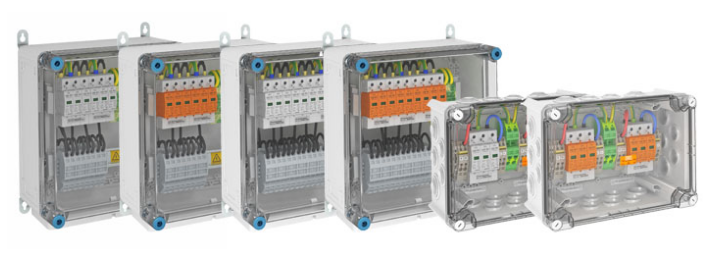
Similarly, the use of network surge arresters in roof systems is important in protecting sensitive power plant components. Both DC and AC lines must be protected with Type 1+2 network surge arresters. Particular attention should be paid to the protection of inverters. DC surge arrester can be used at the input of the inverter and AC surge arrester at the output. Data and communication lines must be protected with suitable Type 3 surge arresters.
Equipotential and Grounding
It is very important to construct my grounding system in accordance with the standards and to make engineering calculations. The products used should provide the relevant standard value, choosing the right one. Considering that the roof systems will be exposed to harsh weather conditions, care should be taken to ensure that the grounding products are long-lasting and that they do not form corrosion. What we see in grounding systems is that the concept of equipotential is not paid attention to. The concept of potential equalization is neglected, and different parts of the facilities are grounded independently of each other. However, the correct thing is to connect the grounding system of the facility to the equipotential busbar. In this way, the voltage that may occur between any two points in your business is prevented and equipotential bonding is provided between all grounding protections.